“Great software isn't just built with code; it's built with a disciplined system. Since I respect the confidentiality of my clients and my firm, this page is dedicated to sharing how I work—the methodologies and philosophies I use to ensure every sprint is a step toward excellence.”
1. The Agile Rhythm: Daily Execution & Focus
The approach emphasizes adaptation to team dynamics rather than rigid adherence to processes.
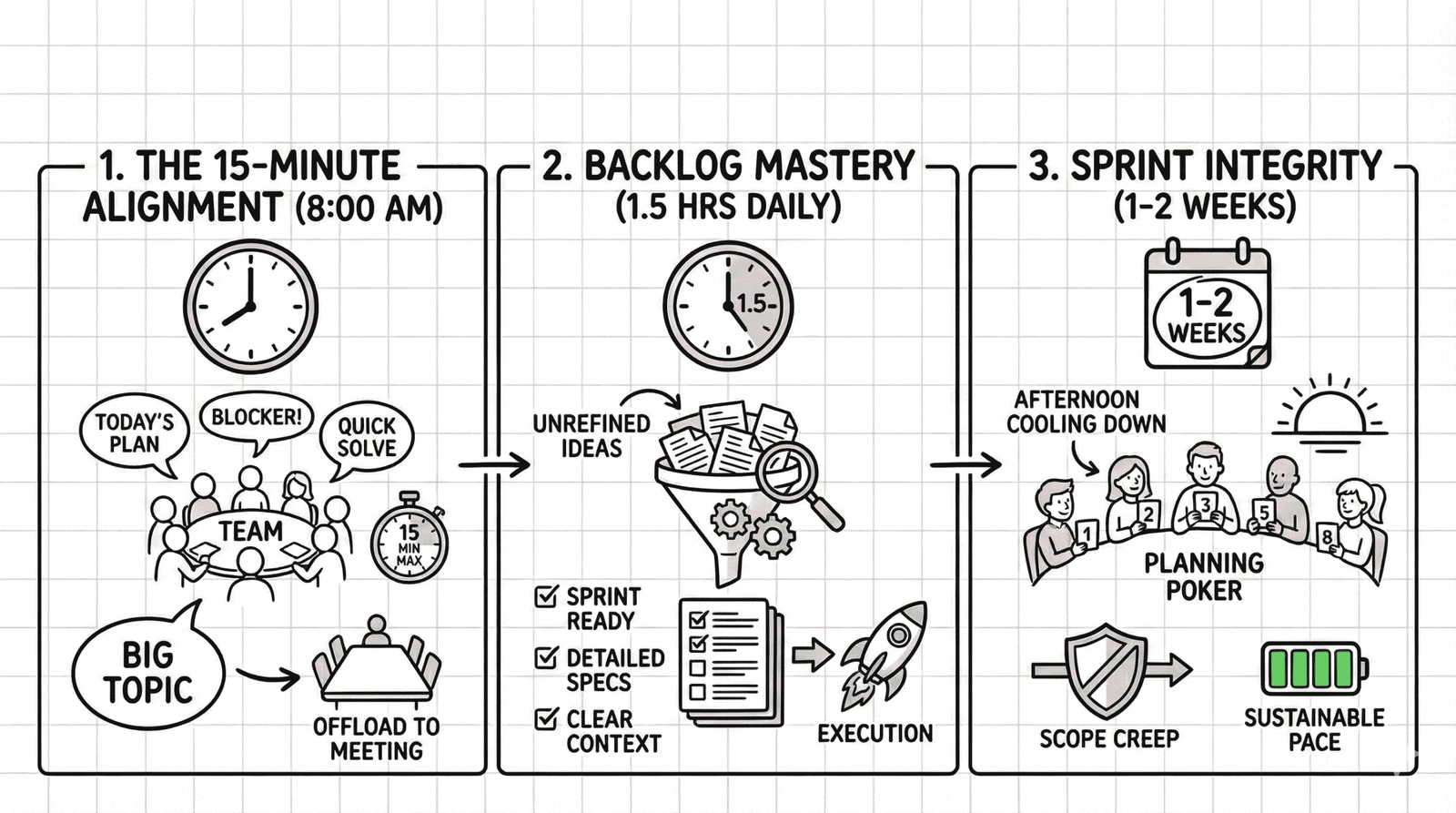
The 15-Minute Alignment
- The 8:00 AM Synchronization: Daily standups begin promptly at 8:00 AM where each team member shares planned tasks, maintaining transparency and alignment.
- Immediate Problem-Solving: Blockers are addressed collaboratively in real-time during the meeting.
- Strategic Offloading: Complex topics requiring extended discussion are scheduled separately to keep standups focused.
Backlog Mastery (Strategic Grooming & Detailed Execution)
The product backlog receives treatment like “an investment portfolio—constantly grooming and prioritizing it to maintain a healthy project trajectory.”
- 1.5 Hours of Daily Focus: A dedicated 1.5-hour window is reserved each day for backlog refinement.
- Precision in Documentation: Every task receives meticulous detail to eliminate ambiguity and enable first-time accuracy.
- Ensuring “Ready” Status: Tickets must meet the “Definition of Ready” before developer assignment, preventing mid-sprint confusion.
Sprint Integrity (Realistic Commitments & Sustainable Pace)
Scope management protects team focus and prevents burnout.
- Short, Focused Cycles: Sprints operate on 1–2 week cycles maintaining momentum and feedback loops.
- Team-Based Estimation (Planning Poker): The entire team assigns story points collectively, ensuring commitments reflect shared reality.
- Strategic Scheduling: Estimation sessions occur in the afternoon as a “cooling down” period after intensive individual work.
2. The Translation Layer: Bridging Business & Code
The core strength centers on interpreting between business and technical worlds.
Flow Visualization (Bridging Operational Needs and Technical Execution)
Serving as the primary architect for project requirements, translating business visions into functional software.
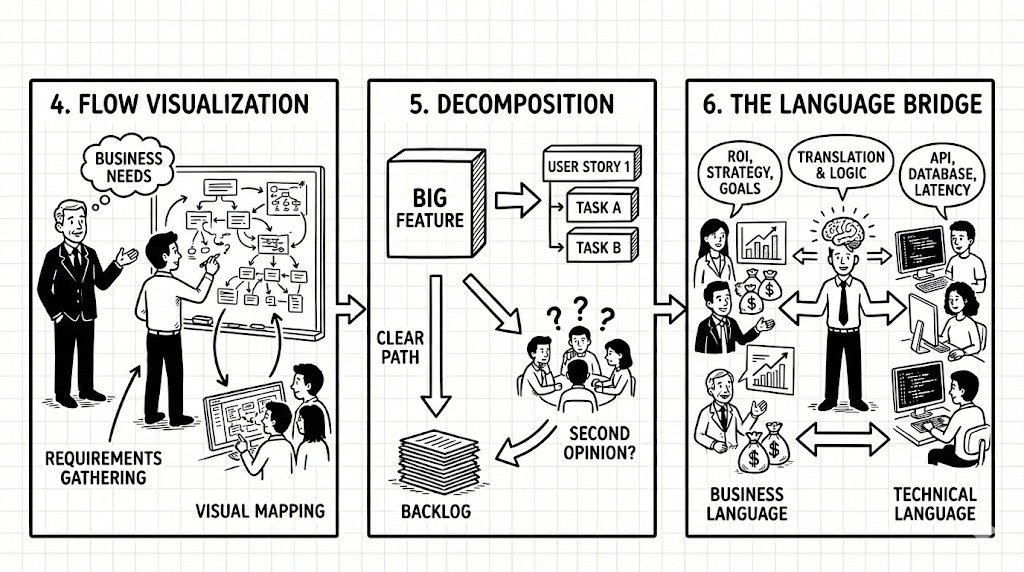
- Multi-Level Requirement Gathering: Direct coordination with end-users, stakeholders, and Directors to capture core operational needs.
- Operational-to-Technical Translation: Abstract operational needs convert into precise technical specifications.
- Actionable Visual Mapping: Visual flows and diagrams map complex business logic, providing clarity on “why” and “how” for development teams.
Decomposition (Precise Breakdown & Collaborative Validation)
Large features are dismantled into clear, executable steps.
- Initial Deconstruction: Large features break down into smaller, manageable components.
- Direct-to-Backlog Pipeline: Clear implementation paths translate immediately into detailed User Stories and Technical Tasks.
- Collaborative Second Opinions: Complex features involve team consultation, ensuring simpler technical paths aren't overlooked.
The Language Bridge (Domain Mastery & Logical Deconstruction)
A primary core strength involves seamless navigation between boardroom and engineering contexts.
- Bilingual Proficiency (Business & Tech): Extensive vocabulary covers both business language (ROI, operational impact, strategic value) and technical language (architecture, implementation details).
- Logical Problem Deconstruction: Complex business problems are deconstructed logically and reassembled into clear technical roadmaps.
- Stakeholder-Team Synergy: Speaking the native language of both management and engineers bridges communication gaps with high fidelity.
3. The Japanese Influence: Discipline & Kaizen
Working in a Japanese technology firm instilled deep respect for precision and continuous improvement.
- Hou-Ren-So (Report, Inform, Consult): Communication flows seamlessly, keeping everyone informed and aligned.
- Nemawashi (Consensus Building): Before major decisions, groundwork is laid through stakeholder consensus building.
- Continuous Improvement: Every retrospective targets process refinement, aiming for “a 1% improvement every single day.”
4. Risk & Market-Driven Management
Background as a Market Observer directly influences project management approaches.
- Data-Driven Decisions: Analysis includes market trends and technological shifts to ensure product relevance and competitiveness.
- Proactive Risk Allocation: Similar to DCA investment strategies, buffers are “allocated” for technical risks and uncertainties.